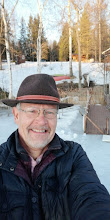
Thomas H. Greco on erityisen innostunut paikallisrahan mahdollisuuksista. Paikallisrahan on oltava korotonta eli ilman "rahakasvun" vääristelevää vaikutusta talouteen.
Wiki: Thomas H. Greco.
Tom Greco interviewed by Daniel Pinchbeck
Part a.
Part b.
Part c.
Thomas H. Greco, Jr. is a community and monetary economist, educator, writer, and consultant.
Tom is the author of; 'Money: Understanding and Creating Alternatives to Legal Tender' (Chelsea Green Publishing Company, 2001); 'New Money for Healthy Communities' (1994); 'Money and Debt: A Solution to the Global Crisis' (1990).
In his latest book 'The End of Money and the Future of Civilization' (Chelsea Green: 2009) Tom explains how conventional money malfunctions and how an ideal money would be structured.
*
Tässä lisää Grecon ajatuksia PPT-diaesityksenä hänen kotisivultaan. Tämä PPT-esitys sisältää pitkälti ne kuvat joihin hän viittaa yllä olevassa kolmiosaisessa videohaastattelussa.
- Money, Power, Democracy and War
This slide show is pretty comprehensive in outlining the nature of the "money problem" and in describing what is needed to solve it. It highlights some little-know history about the evolution of banking and the politicization of money, along with the principles that can be applied to liberate the exchange process and lead to a more just and sustainable economic order.
It is based on a presentation made by Thomas Greco in Tucson, Arizona on March 13, 2007.
Erityisbonuksena tässä vielä David Icken oiva esitys What Is Money
Päivitys 22.12 Richard C. Cook: Review of Thomas Greco’s: “The End of Money and the Future of Civilization”
Kirjanpitäjien temppu kirjata rahaa tileille ns tyhjästä ja velottaa tästä korkoa, pakottaa tämä heikompia valtioita hyväksymään tätä "rahaa", tässä Anglo-Amerikkalaisen suurvallan keinot Bank of Englandin perustamisen jälkeen, asteittain vallata koko maailma.
The bookkeeper’s trick of creating money out of thin air, charging interest for its use, then forcing it down the throats of weaker nations by threat of violence, is what has allowed the Anglo-American empire, since the founding of the Bank of England in 1696, gradually to conquer the world. Though President Woodrow Wilson signed the Federal Reserve Act into law, he saw what that action meant. Greco cites Wilson as writing: “There has come about an extraordinary and very sinister concentration in the control of business in the country… The great monopoly in this country is the monopoly of big credits.”